2020.03.15
Stratified social distancing
Consider the following objectives for dealing with COVID-19:
Achieve herd immunity as quickly as possible (e.g. something like 60 percent or more of the population resistant after infection);
Minimize number of death; and
Minimize economic disruption.
If so, one possible strategy to achieve those aims is stratified social distancing. Here are the 3 simple rules that would govern this option:
If you are >=45 years old, then maximize social distance, hand washing, etc.
If you are <45 continue life as usual, unless you are in close contact with anyone >=45, or have an adverse health condition (e.g. immunocompromised). If so, label yourself as over 45, and act like one (see rule 1 above);
Anyone in a position of authority – from heads of households, to school principals, building managers, CEOs, and Presidents – your mission is to facilitate and enforce rules 1 and 2.
Here are some examples of how these rules may apply in practice:
Universities, and university dorms, should stay opened. Professors and students over 45 stay home.
Schools stay open. Children who live with grandpa, isolate with grandpa (as per rule 2 above), and use distance learning.
Buildings with a mix of younger and older households take measures to enforce rules 1 and 2. For example, reserve elevators for the over 45 only. Everyone else use stairs. Clean common surfaces (e.g. door handles) more frequently. Etc.
Everybody under 45 continue to take metro, work at the office as usual. The rest telecommute, or, if they cannot work remotely, they receive sick leave / pay.
Test everyone labelled >45 (see Rule 2).
The rationale is based on three facts:
Without herd immunity, extreme social distancing may be needed for months. This is unlikely to be sustainable, and hence effective.
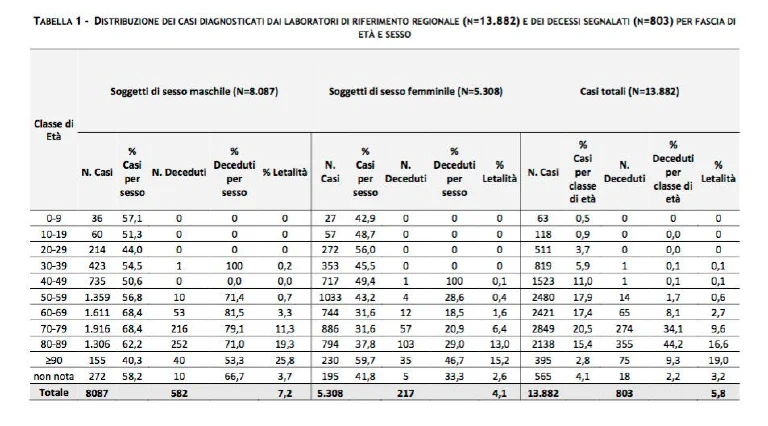
Hospitalization and death are concentrated on the elderly.
Over 60 percent of the US population is under 45.
So the simple idea is to let the young become immune, while the elderly isolate. This should shorten the time to herd immunity, minimize economic disruption, and the time the older population has to to isolate.
Is this moral?
Historically, we have sent thousands of young people to die in the trenches for a just cause. Here their risk is a lot lower, and the cause is just.
Will it work?
The critical assumption is that rules 1 & 2 can be enforced, and that not every under-45 lives in close quarters with an over 45 (in which case everyone isolates). This is by no means a forgone conclusion.
Some epidemiologists are skeptical (William Hanage, Saloni, Joscha Bach). The main critique is that anything short of lock-down will overwhelm the health system, even with stratified social isolation (Jenkins et al find demand will be 2x capacity PDF). This is a very serious critique but see below.
Another critical assumption is that the young really are unlikely to suffer death, or long-term consequences.
What if the health system is already overwhelmed?
Practice extreme social distancing until things are back in control, then adopt stratified distancing. Also, make health capacity expansion, specially of ICUs, a top priority. Surely we can double, or treble it, if we adopt a war footing. As Joshua Gans puts it: “The health care system needs to surf the curve”
PS: As I was writing this, I came across a Tweet from Miguel Hernan proposing a very similar thing. He called it stratified lockdown. I borrowed the terminology. Other scientists think it might be a good idea (Robert Hanson).
*PPS: I am not a public health expert. The above are ideas for discussion, not health advice.
3/19/2020 - Updated post with some links to critiques etc
3/24/2020 - Alex Tabarrok is skeptical. I think his mortality estimates are way too high. Also, unlike in my proposal, the stratification he examines is not as nuanced as my Rule 2 above. For example, I stipulate that if you are under 45 but with a pre-existing condition, you behave as if you are over 45, and so on. However, he raises valid concerns about how feasible stratified social distancing is in practice. My default is that, where there is a will – and leadership – there is a way.
5/8/2020 - The online article by Chikina and Pedgen, “Fighting COVID-19: the heterogeneous transmission thesis”, comes to similar conclusions using a SIR model.
Enjoyed this post? Subscribe via RSS to get new articles delivered to your feed reader.